
Do You Qualify for an ESA Letter in Colorado? Clinician-Reviewed 2026 Eligibility Guide
⚠️ Informational Disclaimer: This guide is provided for general educational purposes only. It does not constitute medical advice, mental-health treatment, or legal counsel. Only a licensed mental health professional (LMHP) can determine whether an emotional support animal letter is clinically appropriate for you. For housing disputes, consult a Colorado-licensed attorney or contact your local legal aid office for FHA enforcement guidance.

🔑 Key Takeaways
- An ESA letter is a formal written recommendation issued only by a licensed mental health professional — not a registry, website certificate, or ID card.
- Federal Fair Housing Act protections, guided by HUD Notice FHEO-2020-01, apply to most Colorado rental housing regardless of a landlord's no-pet policy.
- There is no fixed list of qualifying conditions; any diagnosed mental or emotional disability that meaningfully impairs a major life activity may support an ESA recommendation.
- Approval is never automatic. A Colorado-licensed clinician reviews your unique clinical picture individually before issuing any letter.
- ESAs do not have air-travel rights under the Air Carrier Access Act as of 2021. Housing is the primary protection.
- Online ESA registries and "instant certificate" services are not legally recognized and are explicitly flagged as fraudulent by HUD.
1. What Is an ESA Letter — and Why Clinician Quality Matters
An emotional support animal (ESA) letter is a formal clinical document written on the letterhead of a licensed mental health professional (LMHP), confirming that a specific individual has a mental or emotional disability and that an emotional support animal is part of their recommended therapeutic plan. It is not a registration certificate, a laminated ID card, or a database entry. It is a medical-adjacent professional opinion from a credentialed clinician who has evaluated you — and its legitimacy begins and ends with that clinician's license and the integrity of their assessment.
In Colorado, as in every other state, the credibility of your ESA letter is only as strong as the professional standing of the person who signs it. A letter issued after a genuine clinical conversation with a Colorado-licensed LCSW, psychologist, LMFT, LMHC, or psychiatrist carries the legal and ethical weight that housing providers, property managers, and — when necessary — Colorado courts expect to see. A generic PDF downloaded from an online registry does not.
This distinction matters enormously for Colorado renters. Housing providers are increasingly sophisticated about spotting documentation that doesn't reflect a real therapeutic relationship. When a landlord receives a credible, clinician-authored ESA letter that complies with the standards described in HUD Notice FHEO-2020-01, they understand their obligations under the Fair Housing Act. When they receive a suspicious document from an unrecognized out-of-state "registry," they may challenge it — and they may be right to do so.
At ESA Letter Colorado, every evaluation is conducted by a licensed mental health professional who holds an active Colorado license and is familiar with both federal FHA standards and the specific housing landscape Colorado renters navigate. The sections that follow will help you understand whether you may qualify for that evaluation — and what the process genuinely involves.
2. The Federal and Colorado Legal Framework for ESA Housing Rights
Federal Foundation: The Fair Housing Act and HUD Notice FHEO-2020-01
The primary legal authority governing ESA housing rights in Colorado is the federal Fair Housing Act (FHA), 42 U.S.C. § 3604, which prohibits discrimination in housing on the basis of disability. Under the FHA, a person with a disability may request a reasonable accommodation — including permission to keep an emotional support animal — even in housing that otherwise maintains a strict no-pets policy. This right applies to most private landlords, apartment communities, condominium associations, and housing cooperatives in Colorado.
The operational guidance that shapes how this law is applied comes from the U.S. Department of Housing and Urban Development's landmark notice, FHEO-2020-01: "Assessing a Person's Request to Have an Animal as a Reasonable Accommodation Under the Fair Housing Act" (January 2020). This notice is the most important document in the ESA housing landscape, and understanding its logic is essential for any Colorado renter seeking an accommodation.
Under FHEO-2020-01, a housing provider receiving an ESA accommodation request must assess two questions: (1) Does the person have a disability as defined by the FHA? (2) Does the requested accommodation — keeping the ESA — have a nexus, or connection, to that disability? If a qualified professional with personal knowledge of the requester provides reliable information establishing both elements, the housing provider generally must grant the accommodation, unless doing so would impose an undue administrative or financial burden or fundamentally alter the nature of the housing.
The notice also explicitly addresses the problem of fraudulent documentation, noting that housing providers may request reliable documentation when a disability is not obvious and the disability-related need for the animal is not apparent. This is precisely why the source and quality of your ESA letter matters: a legitimate letter from a licensed clinician answers both of HUD's required questions clearly and credibly.
Colorado State Overlay: C.R.S. § 24-34-502 and the Colorado Anti-Discrimination Act
Colorado's own anti-discrimination statute, the Colorado Anti-Discrimination Act (CADA), codified primarily at C.R.S. § 24-34-502, provides parallel housing protections against disability-based discrimination and, in some respects, extends further than the federal FHA in its definitional scope. Colorado's definition of "disability" under CADA is broad, encompassing physical, mental, and emotional impairments that substantially limit one or more major life activities.
Colorado does not, as of the 2026 publication date of this guide, impose the same pre-letter 30-day established-relationship requirement that states like California (AB-468) and Montana (HB-703) have enacted. However, this does not mean a Colorado clinician can — or should — issue a letter after a perfunctory interaction. HUD's standards require a clinician to have sufficient personal knowledge to make a reliable determination, and ethical Colorado LMHPs will conduct a genuine evaluation regardless of whether state law mandates a waiting period. The absence of a statutory minimum relationship period in Colorado is not an invitation for a "rubber-stamp" letter; it is simply a reflection of the state legislature's current approach.
For authoritative guidance on your specific situation, including any landlord disputes, consult a Colorado-licensed attorney or reach out to Colorado's Civil Rights Division (CCRD), which enforces CADA.
3. ESA Qualifying Conditions in Colorado: What Licensed Clinicians Look For

One of the most common questions Colorado residents ask is: "What conditions qualify me for an ESA letter?" The honest — and clinically accurate — answer is that there is no fixed, enumerated list. What matters is not the diagnostic label itself but whether you have a recognized mental or emotional disability that meaningfully limits one or more major life activities, and whether an emotional support animal is therapeutically appropriate as part of your care plan.
That said, a number of conditions are commonly evaluated in the context of ESA recommendations in Colorado. The following represents the range of diagnoses and presentations a licensed clinician might consider — not a guarantee that any of these conditions automatically results in an ESA letter.
Anxiety-Related Conditions
Generalized anxiety disorder, social anxiety disorder, panic disorder, specific phobias, and agoraphobia are among the most frequently cited conditions in ESA evaluations. Many people living with chronic anxiety find that the consistent, calming presence of an animal meaningfully reduces physiological stress responses and supports daily functioning. If you believe anxiety may be affecting your life in a significant way, our detailed resource on anxiety and ESA eligibility in Colorado provides further clinical context.
Depressive Disorders
Major depressive disorder, persistent depressive disorder (dysthymia), and depression associated with other conditions may support an ESA recommendation when a clinician determines that the animal's presence contributes meaningfully to emotional stability, motivation, or daily routine. Learn more about how clinicians assess these presentations in our guide on depression and ESA letters in Colorado.
Post-Traumatic Stress Disorder (PTSD)
PTSD — whether arising from military service, interpersonal trauma, childhood adverse experiences, or other qualifying events — is a recognized disability under both the FHA and CADA. Colorado has a significant veteran and first-responder population for whom animal-assisted support represents a meaningful therapeutic adjunct. Our dedicated guide on PTSD and emotional support animals in Colorado covers this topic in depth.
Other Commonly Evaluated Presentations
- Bipolar disorder — including bipolar I, bipolar II, and cyclothymia, particularly where mood stabilization and daily routine are clinical priorities.
- OCD and related disorders — obsessive-compulsive disorder, hoarding disorder, and body dysmorphic disorder may be evaluated where an animal's presence provides grounding and reduces compulsive cycles.
- ADHD — attention-deficit/hyperactivity disorder may qualify where symptoms substantially impair daily functioning, emotional regulation, or social engagement.
- Autism spectrum disorder (ASD) — many individuals with ASD find that animals reduce sensory overload, support communication, and improve quality of life.
- Schizophrenia and psychotic disorders — where appropriate and clinically indicated, an ESA may support stability and routine.
- Borderline personality disorder and other personality disorders — where emotional dysregulation substantially impairs daily functioning.
- Adjustment disorders — particularly when triggered by significant life transitions such as bereavement, divorce, or relocation.
- Eating disorders — anorexia nervosa, bulimia nervosa, and binge eating disorder when they substantially impair daily life.
- Sleep-related conditions with psychological etiology — insomnia disorder and other sleep disturbances rooted in mental health may be considered where they meaningfully impair functioning.
This list is illustrative, not exhaustive. A Colorado-licensed clinician will assess your specific presentation, history, and functional impairments — not simply whether your diagnosis appears on any particular list. The clinical standard is whether a disability exists and whether an ESA addresses a genuine therapeutic need connected to that disability.
4. Core Eligibility Criteria: Who May Qualify for an ESA Letter in Colorado
Understanding the eligibility framework helps set realistic expectations. A Colorado-licensed mental health professional evaluating a prospective ESA patient will generally consider the following criteria. Meeting some or all of these does not guarantee a letter — but they represent the clinical and legal foundation upon which a legitimate evaluation rests.
Criterion 1: Presence of a Diagnosable Mental or Emotional Disability
You must have a recognized mental or emotional condition that meets the definition of a disability under the FHA — that is, a physical or mental impairment that substantially limits one or more major life activities. This is evaluated by the clinician during your consultation. Self-reporting a diagnosis you received elsewhere, or describing symptoms consistent with a recognized condition, gives the evaluating clinician important starting information, though they will conduct their own independent assessment.
Criterion 2: Functional Impairment in Daily Life
The condition must meaningfully affect how you function day-to-day. A clinician will explore whether your mental or emotional state impacts your ability to work, sleep, maintain relationships, manage self-care, leave your home, or engage in other major life activities. The degree of impairment matters — a transient, mild stressor that resolves on its own typically does not rise to the level of a disability requiring a reasonable housing accommodation.
Criterion 3: A Therapeutic Nexus Between the Animal and Your Condition
Perhaps the most important criterion under HUD FHEO-2020-01 is the nexus requirement: the ESA must provide support that directly addresses your disability. A clinician will explore how the presence of an animal affects your symptoms, functioning, and wellbeing. This is not about whether you love your pet — it is about whether the animal plays a genuine therapeutic role in managing a recognized disability.
Criterion 4: Colorado Residency and Clinician Licensing Alignment
For your ESA letter to be recognized as legitimate under Colorado law and HUD standards, the clinician who issues it must be licensed in Colorado. Telehealth has expanded access considerably, but the state-licensing requirement remains paramount. An online provider whose clinicians are licensed only in California, Florida, or another state cannot validly issue a Colorado ESA letter.
Criterion 5: Honest and Accurate Self-Disclosure During Evaluation
A legitimate clinical evaluation depends on honest communication. Misrepresenting your symptoms, fabricating a history, or coaching your responses to obtain a letter for a pet you simply wish to keep in a no-pets building is fraudulent conduct that can expose you to legal consequences and undermines the integrity of ESA accommodations for everyone who genuinely needs them. Colorado's licensed clinicians are trained to conduct thorough evaluations, and they take that responsibility seriously.
5. Factors That May Affect Your Evaluation Outcome
Just as certain presentations may support an ESA recommendation, certain factors may lead a clinician to conclude that an ESA letter is not appropriate at this time, or that further evaluation is needed before one can be issued. This section addresses some of those scenarios honestly — because legitimate ESA letters come from legitimate evaluations, not from services that promise approval before speaking with you.
Absence of a Qualifying Disability
If, after a thorough evaluation, the clinician determines that you do not currently have a mental or emotional impairment that substantially limits a major life activity, they cannot ethically issue an ESA letter. This does not mean your challenges are not real or that you are not experiencing difficulty — but the legal standard for an ESA accommodation is specific, and not every form of stress or unhappiness meets that threshold.
No Clear Therapeutic Nexus
A person may have a recognized disability but may not have a meaningful therapeutic relationship between their condition and an animal's presence. If the clinician cannot establish that an ESA would address the functional impairments associated with the disability, they cannot truthfully assert the nexus that HUD requires.
The Animal Presents Safety or Direct Threat Concerns
Under FHA standards, housing providers may deny an ESA accommodation if the specific animal poses a direct threat to the health or safety of others or would cause substantial physical damage to property. A clinician's letter does not override a legitimate direct-threat finding. If your animal has a documented history of aggression or dangerous behavior, this may complicate — though not necessarily prevent — a housing accommodation request.
Seeking a Letter for Non-Housing Purposes
As of 2021, ESAs no longer have protections under the Air Carrier Access Act. Airlines are not required to accommodate ESAs, and most major carriers now treat them as regular pets subject to standard fees and restrictions. A clinician cannot issue a letter that would confer air-travel rights that no longer exist under federal law. If you require an animal's assistance during travel, you may wish to explore whether your situation might support a Psychiatric Service Dog (PSD) — a fundamentally different legal category with distinct training and behavioral requirements.
6. The Clinician Evaluation Process: What to Expect Step by Step
Many Colorado residents are uncertain about what a legitimate ESA evaluation actually looks like. Understanding the process helps you prepare — and helps you distinguish a genuine clinical encounter from a fraudulent "instant approval" service. Our full guide on how to get an ESA letter in Colorado walks through each stage in detail, but here is a practical overview.
Step 1: Initial Intake and Screening
You will complete a detailed intake questionnaire covering your mental health history, current symptoms, medications (if any), and how your condition affects daily life. This information forms the foundation of the clinical conversation and allows the clinician to conduct a meaningful evaluation rather than a superficial one. Honest, thorough responses here are essential.
Step 2: Licensed Clinician Consultation
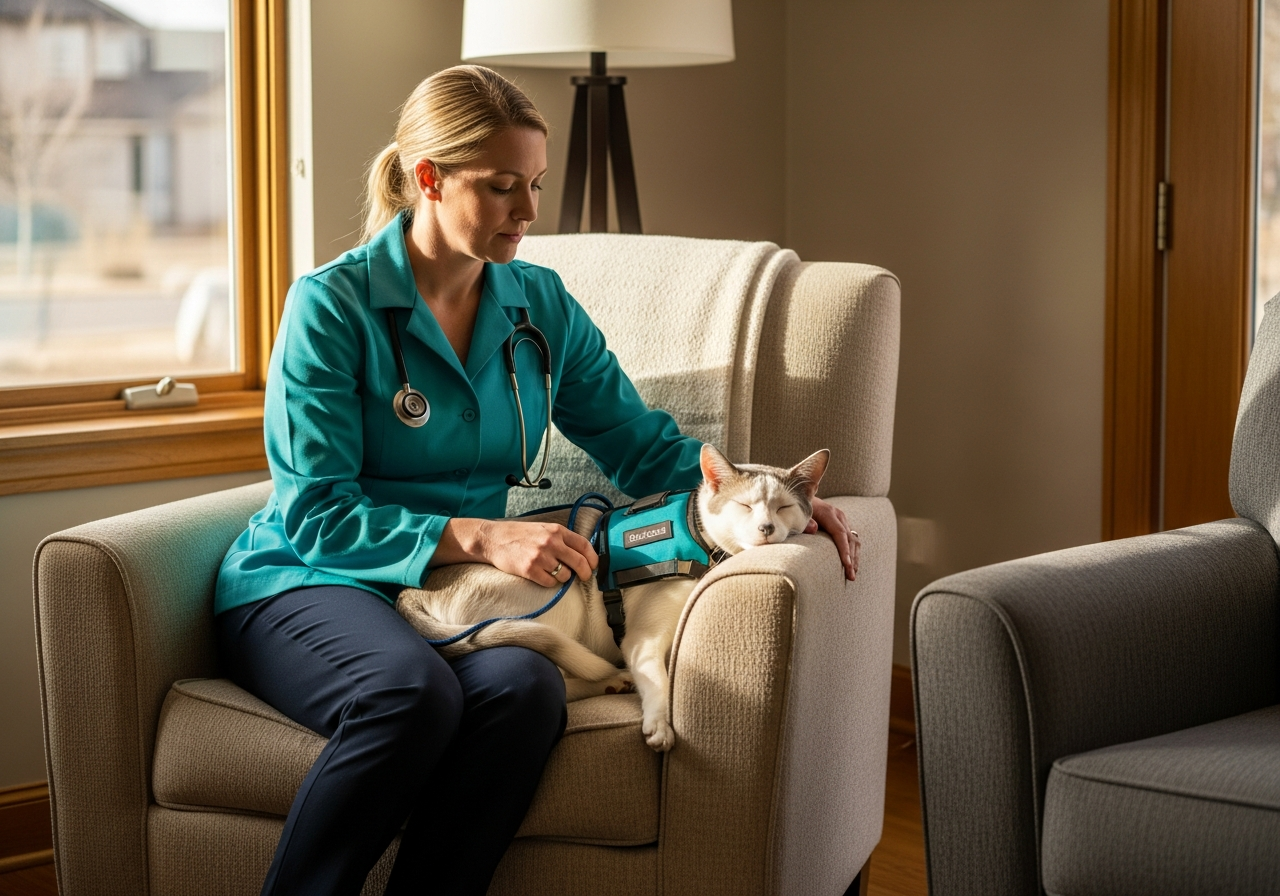
A Colorado-licensed mental health professional — an LCSW, LMHC, LMFT, psychologist, or psychiatrist — will review your intake information and conduct a live consultation (typically via secure telehealth video or phone) to assess your presentation. This is not a rubber stamp. The clinician will ask follow-up questions, explore your history, and make an independent clinical determination about whether an ESA recommendation is appropriate.
Step 3: Clinical Determination
Following the consultation, the clinician makes their professional judgment. If they determine that you have a qualifying disability and that an ESA is therapeutically appropriate, they will author and sign an ESA letter on their professional letterhead, including their name, license type, license number, state of licensure, and contact information — all elements that HUD guidance indicates a housing provider may verify.
If the clinician determines that a letter is not appropriate based on their evaluation, they will communicate that outcome. No legitimate service can guarantee a letter before an evaluation has occurred.
Step 4: Letter Delivery and Documentation
Your ESA letter will be delivered securely, typically in PDF format, ready to provide to your housing provider as part of a reasonable accommodation request. Most letters are dated and include the clinician's professional credentials. ESA Letter Colorado also provides guidance on how to submit your request appropriately — because how you present your documentation to a landlord matters as much as the document itself.
Step 5: Follow-Up and Annual Review
ESA letters are not permanent documents. Housing providers may reasonably request updated documentation if a letter is more than one year old or if circumstances have changed. Maintaining an ongoing relationship with a licensed clinician ensures your documentation remains current and that your therapeutic plan — of which the ESA may be one element — continues to reflect your actual clinical needs.
7. Using Your Colorado ESA Letter: FHA Housing Protections Explained
Once you have received a legitimate ESA letter from a Colorado-licensed clinician, understanding how to use it effectively in the Colorado rental market is the next critical step. Our comprehensive resource on Colorado ESA housing letters and FHA protections covers this topic exhaustively, but the following summarizes the key principles.
What Housing Is Covered?
The FHA covers most residential housing in Colorado, including apartments, condominiums, townhomes, and single-family rentals managed by a third-party property manager. Notable exceptions include owner-occupied buildings with four or fewer units (the "Mrs. Murphy" exemption) and housing operated by religious organizations exclusively for their members. If your housing does not fall within an exception, your landlord or housing association is generally required to consider your reasonable accommodation request in good faith.
How to Submit a Reasonable Accommodation Request
You are not required to disclose your specific diagnosis to your housing provider. You need only indicate that you have a disability (as defined by the FHA) and that you are requesting a reasonable accommodation — permission to keep your ESA — because of that disability. Submitting your request in writing, accompanied by your ESA letter, creates a clear record. Your housing provider then has a reasonable period to respond.
What a Landlord May and May Not Do
Under FHEO-2020-01, a housing provider may ask for reliable documentation if your disability is not obvious and the need for the animal is not apparent. They may verify that the documentation comes from a licensed professional. They may not, however, demand that you disclose your specific diagnosis, require you to use a particular "approved" registry, charge a pet deposit or pet fee for an ESA (though they may hold you responsible for actual damage caused by the animal), or deny the accommodation without an individualized assessment.
When a Landlord Refuses
If your housing provider refuses a legitimate ESA accommodation request backed by a credible clinician letter, you have several options. You may file a complaint with HUD's Office of Fair Housing and Equal Opportunity (FHEO) or with the Colorado Civil Rights Division (CCRD) under CADA. You may also consult a Colorado-licensed attorney who practices fair housing law to explore civil remedies. For lower-income renters, Colorado Legal Services and other legal aid organizations provide guidance on FHA enforcement at no cost.
8. Common Misconceptions About ESA Eligibility in Colorado
Misinformation about ESA eligibility is widespread, and it causes real harm — both to renters who are misled about their rights and to those who hold legitimate documentation that is unfairly tainted by association with fraudulent services. The following are the most consequential misconceptions we encounter.
Misconception 1: "I Can Register My Pet as an ESA Online"
There is no national ESA registry, no official ESA database, and no government-issued ESA certification. HUD has explicitly stated in its published guidance that online ESA registries and certificates purchased from websites are not reliable documentation for housing accommodation purposes. A $40 certificate with a paw-print logo does not confer any legal rights. The only document that matters is an ESA letter from a licensed mental health professional who has actually evaluated you.
Misconception 2: "Any Animal Automatically Qualifies as an ESA"
The FHA does not limit ESA species in the same way it limits service animals — meaning that animals other than dogs and cats may potentially qualify as ESAs in housing contexts. However, this does not mean any animal automatically qualifies. A housing provider may deny an accommodation for an animal whose species poses a direct threat, causes significant property damage that cannot be mitigated, or requires a fundamental alteration of the housing provider's services. Exotic or unusually large animals are more likely to face challenges. Your clinician's letter addresses the therapeutic need; the housing provider assesses whether the specific animal is appropriate in context.
Misconception 3: "My ESA Letter Gives Me the Right to Fly with My Animal"
This is one of the most persistent and damaging misconceptions in the ESA space. As of January 2021, the U.S. Department of Transportation's final rule under the Air Carrier Access Act no longer requires airlines to accommodate emotional support animals. All major U.S. airlines now treat ESAs as regular pets, subject to standard pet policies, carrier fees, and species restrictions. If traveling with an animal is a clinical necessity for you, speak with a licensed clinician about whether a trained Psychiatric Service Dog — which does retain ACAA protections — might be appropriate for your situation.
Misconception 4: "Any Online Doctor Can Issue My Colorado ESA Letter"
A valid Colorado ESA letter must be issued by a mental health professional who holds an active license in Colorado. A clinician licensed only in Texas, Florida, or any other state cannot issue a valid Colorado ESA letter for Colorado housing purposes. When reviewing any provider, always confirm that the clinician who will evaluate you and sign your letter holds a current, active Colorado license — and that you can verify that license through the Colorado Division of Regulatory Agencies (DORA) professional license lookup tool.
Misconception 5: "ESA Letters Guarantee My Landlord Will Accept My Animal"
A legitimate ESA letter significantly strengthens your position under the FHA and supports your reasonable accommodation request. However, the accommodation process is not automatic. Housing providers retain the right to conduct an individualized assessment, to request clarification, and — in limited circumstances — to deny a request if they can demonstrate undue hardship or a direct threat. Most legitimate requests backed by credible documentation are granted, but outcomes can vary. For guidance specific to your situation, consult a Colorado-licensed fair housing attorney.
Misconception 6: "I Need to Have a Pre-Existing Relationship with a Therapist to Apply"
Unlike California (AB-468) and Montana (HB-703), Colorado does not currently impose a statutory minimum relationship period before a clinician may issue an ESA letter. However, this does not mean a cursory three-minute chat is sufficient. A thorough, good-faith evaluation — conducted in a single session by a competent clinician — is both ethically required and practically necessary for the letter to withstand scrutiny from a housing provider or, if necessary, a Colorado court or administrative body.
9. Your Next Steps Toward a Legitimate Colorado ESA Letter
If you have read this guide carefully and believe you may have a mental or emotional disability that substantially limits your daily functioning — and that an emotional support animal might meaningfully address that impairment — the following steps will help you move forward thoughtfully, legally, and effectively.
Step 1: Reflect Honestly on Your Mental Health
Before beginning any evaluation, take time to reflect honestly on your mental health history, your current symptoms, and how they affect your life. Consider whether you are currently in treatment with a mental health provider. If you are, speak with them first — they may already have the clinical knowledge needed to write an ESA letter, or they can provide valuable context for a new evaluation. Honesty with yourself and with any evaluating clinician is the foundation of a legitimate process.
Step 2: Choose a Provider Whose Clinicians Are Licensed in Colorado
When selecting an ESA letter service, verify — independently, through the Colorado DORA professional license lookup at dora.colorado.gov — that the mental health professional who will conduct your evaluation holds an active Colorado license. Do not rely solely on a website's claims. Ask directly which clinician will evaluate you, what their license type and number are, and which state they are licensed in. A reputable provider will answer these questions without hesitation.
Step 3: Complete Your Intake and Evaluation Honestly
Approach your intake questionnaire and clinical consultation as you would any other healthcare appointment: with full honesty. The clinician's job is to evaluate whether an ESA recommendation is appropriate for you specifically — not to approve every applicant. The integrity of the process protects both you and the broader community of Colorado renters who rely on legitimate ESA accommodations.
Step 4: Submit Your Reasonable Accommodation Request Properly
Once you have received your ESA letter, submit your reasonable accommodation request to your housing provider in writing. Include your letter, a clear statement that you are requesting an accommodation due to a disability, and a description of the accommodation you are requesting (permission to keep your ESA in your unit). Keep copies of everything. If your housing provider does not respond within a reasonable period or denies your request without adequate justification, you have legal options.
Step 5: Stay Informed and Keep Your Documentation Current
ESA law is not static. HUD periodically updates its guidance, and Colorado's legislature and courts may refine the state's approach over time. ESA Letter Colorado monitors these developments so that our clinicians' practices and client documentation remain compliant with the most current federal and state standards. We recommend reviewing your ESA letter annually and maintaining an ongoing relationship with a licensed clinician as part of your broader mental health care.
Frequently Asked Questions: ESA Eligibility in Colorado
Q: Is there an official list of ESA-qualifying conditions in Colorado?
No. Neither federal law nor Colorado state law enumerates a fixed list of qualifying conditions. What matters is whether you have a mental or emotional impairment that substantially limits a major life activity and whether an ESA addresses a genuine therapeutic need connected to that impairment — a determination made by a licensed clinician on an individual basis.
Q: Can my primary care physician issue an ESA letter in Colorado?
In some states, licensed primary care physicians may issue ESA letters where state law permits. In Colorado, the most commonly recognized LMHP categories for ESA letters are licensed clinical social workers (LCSW), licensed marriage and family therapists (LMFT), licensed professional counselors (LPC), licensed mental health counselors (LMHC), psychologists, and psychiatrists. If you have questions about your specific clinician's eligibility to issue such a letter, consult a Colorado-licensed attorney or the Colorado DORA licensing authority.
Ready to start your Colorado ESA letter?
Licensed Colorado clinician review. Compliant with state law.
Get My Colorado ESA Letter